
 512 595 5700
 Calculator
Heat exchangers for Class I, Division 2 hazardous locations
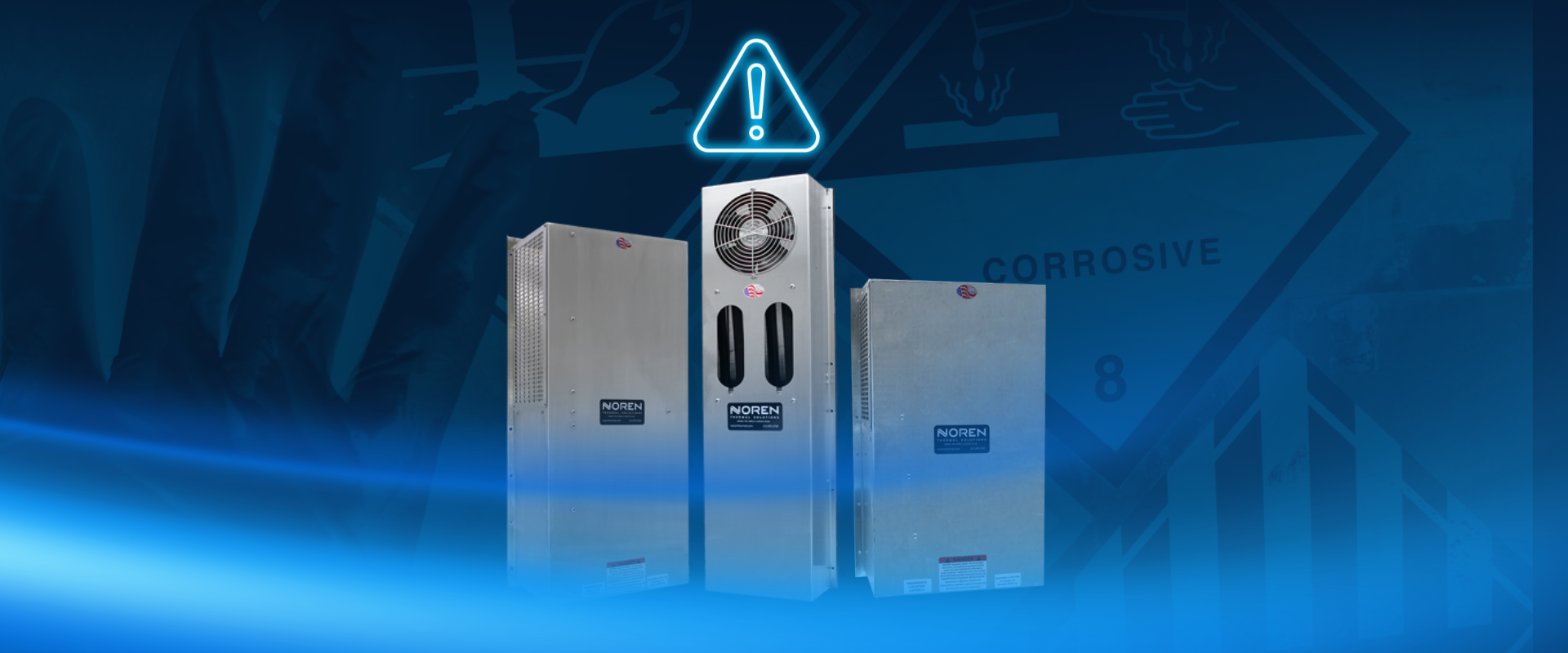
Heat exchangers for Class I, Division 2 hazardous locations
March 16, 2026
Selecting the right Hazardous Location Heat Exchangers ensures compliance, protects critical controls, and maintains operational uptime in some of the most demanding industrial conditions.
Understanding Class I, Division 2 Environments
A Class I, Division 2 hazardous location is defined as an area where flammable gases or vapors are not normally present under standard operating conditions but may appear under abnormal circumstances, such as equipment failure or system leaks.
These environments are common in:
- Oil & gas facilities
- Chemical processing plants
- Fuel storage terminals
- Wastewater treatment plants
- Paint and solvent manufacturing
- Certain packaging and pharmaceutical operations
In these industries, electrical enclosures must be protected not only from heat buildup but also from potential ignition risks.
How Hazardous Location Heat Exchangers Work
Hazardous location heat exchangers use a sealed, closed-loop design. Internal air circulates inside the enclosure while external air passes through a separate channel. Heat transfers across a thermally conductive core without mixing air streams.
This design provides:
- Safe temperature regulation
- Protection against dust, oil mist, and chemicals
- Reduced maintenance
- Extended equipment life
- Energy efficiency compared to compressor-based systems
Because no compressor or refrigerant cycle is involved, these systems are often more reliable in harsh industrial environments.
Applications of Class I Division 2 Heat Exchangers
Oil & Gas: Protecting control cabinets near processing areas and pump stations.
Chemical Processing: Cooling automation systems exposed to solvent vapors.
Wastewater Treatment: Safeguarding VFD panels operating in humid, corrosive environments.
Fuel & Energy Infrastructure: Ensuring reliability of monitoring and control equipment.
In all these applications, safety and thermal performance must work together.
In hazardous industrial environments, thermal management is directly connected to safety and operational continuity. Class I Division 2 Cooling solutions provide the reliability, protection, and compliance required to operate with confidence.
When safety standards are high, and downtime is costly, the right cooling solution makes all the difference.
Proper sizing and certification ensure your equipment operates efficiently while meeting hazardous location requirements. To determine the best Hazardous Location Heat Exchanger for your specific application, we invite you to use Noren’s Heat Exchanger Calculator for a fast and accurate recommendation, call our team directly at 512-595-5700, or connect with one of our experienced sales representatives who can guide you through the entire selection process and help you implement a safe, efficient, and fully compliant HazLoc Certified Cooling solution tailored to your needs.


