 512 595 5700
 Calculator
The Real Difference Between NEMA and IP Ratings
The Real Difference Between NEMA and IP Ratings
May 11, 2026
What are NEMA and IP Ratings?
Both are rating systems that measure the level of protection against the ingress of solids (dust) and liquids (water/moisture).
- NEMA (National Electrical Manufacturers Association): This is the predominant standard in North America. It evaluates protection against dust and water, but also accounts for additional factors such as corrosion resistance and ice displacement.
- IP (Ingress Protection): This is the international standard (IEC 60529). It focuses strictly on protection against solids and water using a standardized two-digit code.
It is not a matter of which is "better," but rather which one fits your specific region and application. Both systems are robust and have direct equivalencies. For example, a NEMA 4 rating offers protection comparable to an IP66 rating.
At Noren Thermal Solutions, we specialize in NEMA standards. However, if your project utilizes international (IP) specifications, our team can perform the technical conversion to ensure you receive the precise cooling solution for your environment.
Do All Ratings Protect Against Water?
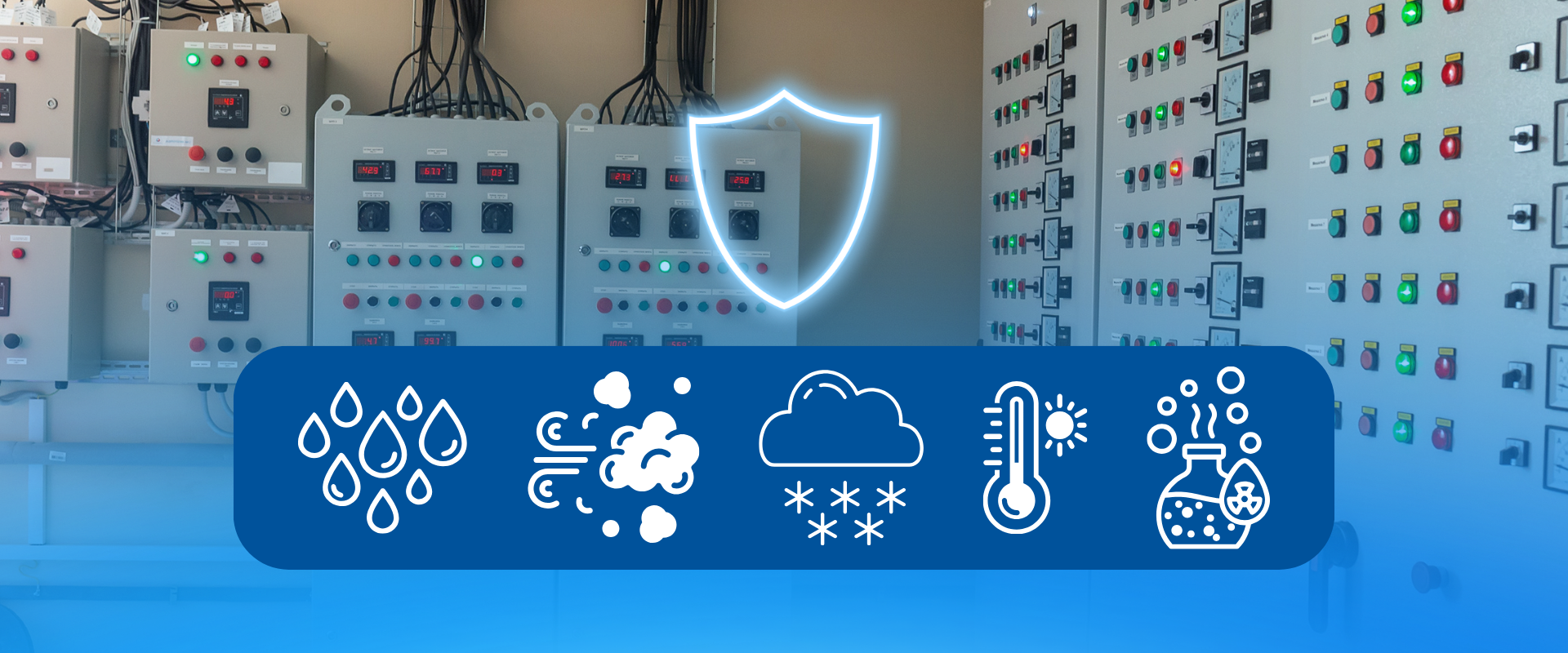
The short answer is no. Each classification is designed for a specific risk level:
- In clean indoor applications, protection against dust particles is often sufficient.
- In mining, marine, or outdoor environments, protection against water jets and corrosion is mandatory.
Key Fact: Many conventional air conditioning systems are being replaced with heat exchangers. The reason? Air conditioners often fail to manage humidity hermetically, whereas heat exchangers completely seal the cabinet, creating an internal environment totally isolated from solids and liquids.
Protect Your Investment with Experts
Don't leave the integrity of your systems to chance. At Noren Thermal Solutions, we provide customized solutions designed to withstand the harshest environments.
Need technical assistance with NEMA ratings?
Contact our sales representatives today; we will help you choose the exact unit to guarantee the safety and efficiency of your enclosures.


