
 512 595 5700
 Calculator
Blog
Do Medical Devices Use Heat Exchangers?

As the industry adopts increasingly more forms of advanced technology, the role of modern heat exchangers in the medical field becomes increasingly more prominent.
Read MoreThe Energy-Efficient Way to Cool Electrical Control Panels

These days, thermal management can mean a wide range of things for companies in various industries. However, the most common and frequent thermal management need is the need to keep electrical enclosures, such as control panels, properly cooled and protected from outside contaminants.
Read MoreWhat Is a Heat Exchanger Feasibility Study?

The ability to conduct feasibility studies in a fast, efficient, and accurate manner has also been a significant advantage in heat exchangers’ contribution
Read MoreHeat Exchangers vs. Air Conditioners for Cabinet Cooling

Over the decades, heat exchangers have replaced air conditioning equipment in a variety of thermal management applications…
Read MoreHow Cold Plates Became High-Performance Cooling Solutions

Cold plates operate on the same principles of transferring electrical waste heat that traditional heat exchangers do.
Read MoreQuestions About the Advantages of Heat Pipes

The secret to a heat pipe’s success is the way in which it combines natural cooling methods to provide optimal heat transfer.
Read MoreThe Difference Between Ambient and Below-Ambient Heat Exchangers

Noren’s below-ambient heat exchangers deliver efficient, eco-friendly cooling for hot climates, reducing reliance on costly air conditioning systems
Read MoreThe Industrial Uses of Cold Plates

Cold plates are a leading thermal management solution, offering advanced designs and custom options to meet evolving industrial applications
Read MoreMeeting NEMA Enclosure Standards with Heat Exchangers
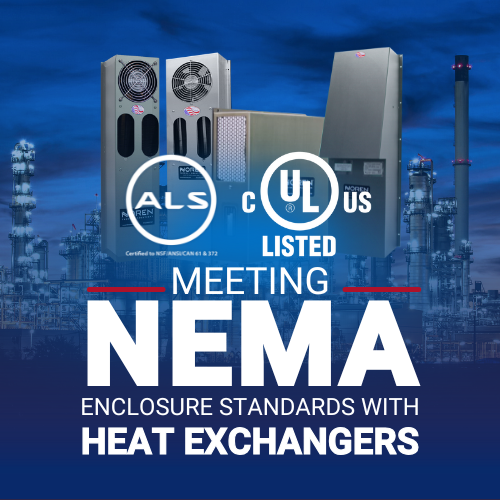
Electrical enclosures, control panels, and equipment at risk of contamination or overheating must meet strict NEMA standards for safety and reliability.
Read MoreWhy Preventing Condensation Matters in Control Panels
Protecting electrical control panels from environmental contaminants is just as important in thermal management as cooling the equipment inside the enclosure
Read More